Private vs federal loans
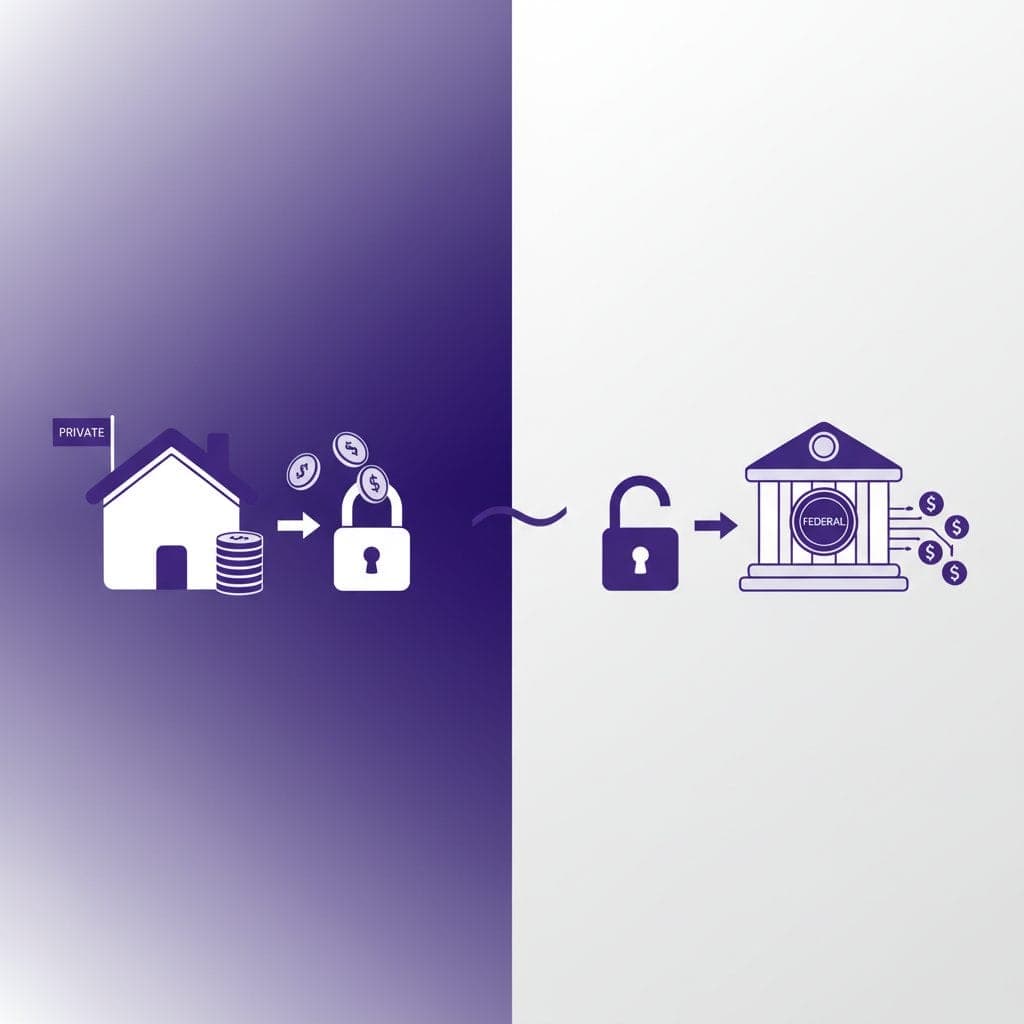
Private vs. Federal Student Loans: A Comprehensive Guide to Making an Informed Decision
Financing higher education is one of the most significant financial decisions many individuals face. In the United States, student loan debt totals approximately $1.77 trillion as of early 2024, affecting roughly 43.5 million borrowers, according to the Federal Reserve Bank of New York. Understanding the fundamental differences between federal and private student loans is essential for making sound borrowing decisions that can affect financial well-being for decades.
What Are Federal Student Loans?
Federal student loans are funded by the U.S. Department of Education and authorized under Title IV of the Higher Education Act. These loans come with standardized terms, fixed interest rates set by Congress, and a range of borrower protections that are not typically available through private lending.
Types of Federal Student Loans
- Direct Subsidized Loans: Available to undergraduate students who demonstrate financial need. The government pays the interest while the borrower is enrolled at least half-time, during the grace period, and during deferment periods.
- Direct Unsubsidized Loans: Available to undergraduate and graduate students regardless of financial need. Interest accrues from the date of disbursement.
- Direct PLUS Loans: Available to graduate/professional students and parents of dependent undergraduates. These require a credit check but have less stringent requirements than most private loans.
- Direct Consolidation Loans: Allow borrowers to combine multiple federal student loans into a single loan with a weighted average interest rate.
Federal Loan Interest Rates (2024-2025 Academic Year)
Federal student loan interest rates are fixed for the life of the loan and are set annually by Congress based on the 10-year Treasury note yield. For the 2024-2025 academic year, rates are:
- Direct Subsidized and Unsubsidized Loans (Undergraduate): 6.53%
- Direct Unsubsidized Loans (Graduate/Professional): 8.08%
- Direct PLUS Loans: 9.08%
These rates apply uniformly to all borrowers regardless of credit score, which is a significant distinction from private lending.
What Are Private Student Loans?
Private student loans are offered by banks, credit unions, online lenders, and other financial institutions. Unlike federal loans, private loan terms, interest rates, and borrower protections vary significantly by lender. These loans are governed by the terms of individual lending agreements and applicable state and federal consumer lending laws rather than the Higher Education Act.
Key Characteristics of Private Loans
- Credit-based underwriting: Interest rates and approval are generally determined by the borrower’s credit score, income, debt-to-income ratio, and other financial factors.
- Variable or fixed rates: Borrowers may choose between fixed and variable interest rates, depending on the lender.
- Cosigner options: Many private lenders require or encourage a creditworthy cosigner, particularly for students with limited credit history.
- Varying loan limits: Private loans may cover up to the total cost of attendance, and some lenders have higher caps than federal loan limits.
Key Differences: A Detailed Comparison
1. Interest Rates
Federal loans offer a single fixed rate for each loan type, applied equally to all borrowers. Private loan rates, by contrast, typically range from approximately 3% to 17% or more, depending on the borrower’s creditworthiness and market conditions. Borrowers with excellent credit (generally 750+ FICO scores) and strong income may qualify for private loan rates that are lower than current federal rates. However, borrowers with fair or poor credit may face significantly higher rates.
It is worth noting that variable-rate private loans may start with lower rates but carry the risk of rate increases over time. According to data from multiple lending platforms, variable rates have historically fluctuated substantially in response to Federal Reserve policy changes.
2. Repayment Options
Federal loans generally offer more flexible repayment structures:
- Standard Repayment Plan: Fixed payments over 10 years
- Graduated Repayment Plan: Payments start lower and increase every two years
- Extended Repayment Plan: Fixed or graduated payments over up to 25 years
- Income-Driven Repayment (IDR) Plans: Including SAVE, PAYE, IBR, and ICR, which cap monthly payments at a percentage of discretionary income (typically 10% to 20%)
Private lenders may offer some repayment flexibility, such as interest-only payments or short-term forbearance, but they generally do not provide income-driven repayment options. Repayment terms for private loans typically range from 5 to 20 years, depending on the lender and loan amount.
3. Loan Forgiveness
Federal student loans may be eligible for several forgiveness programs:
- Public Service Loan Forgiveness (PSLF): Borrowers working full-time for qualifying public service employers may have remaining balances forgiven after 120 qualifying payments under an eligible repayment plan. As of 2024, the Department of Education reports that over $62 billion in PSLF relief has been approved.
- IDR Forgiveness: Remaining balances may be forgiven after 20 to 25 years of qualifying payments under income-driven plans.
- Teacher Loan Forgiveness: Eligible teachers may receive up to $17,500 in forgiveness after five consecutive years of teaching in low-income schools.
Private student loans are generally not eligible for any government forgiveness programs. This is a critical consideration for borrowers planning careers in public service, education, or nonprofit sectors.
4. Deferment and Forbearance
Federal loans offer multiple deferment and forbearance options, including:
- In-school deferment (at least half-time enrollment)
- Economic hardship deferment
- Unemployment deferment (up to 36 months)
- Military service deferment
- General forbearance for up to 12 months at a time
Private lenders may offer limited forbearance or deferment options, but these are typically shorter in duration, may be capped at a total number of months over the life of the loan, and are granted at the lender’s discretion. Borrowers experiencing financial hardship may find fewer safety nets with private loans.
5. Borrower Protections
Federal loans include several statutory protections:
- No prepayment penalties: Borrowers may pay off federal loans early without fees.
- Death and disability discharge: Loans are discharged if the borrower dies or becomes totally and permanently disabled.
- Closed school discharge: If a school closes while the student is enrolled, the loan may be discharged.
- Bankruptcy considerations: While difficult, federal loans may be discharged in bankruptcy under the “undue hardship” standard.
Private loans may or may not include some of these protections. Many private lenders have adopted policies to discharge loans upon borrower death, though this is not universally guaranteed. Cosigners on private loans may remain liable even after a borrower’s death, depending on the lender’s terms. It is essential to review individual loan agreements carefully.
6. Application Process
Federal loans require completion of the Free Application for Federal Student Aid (FAFSA). Eligibility does not depend on credit history for most federal loan types (PLUS loans being the exception, which require the absence of an adverse credit history rather than a high credit score).
Private loan applications typically involve a full credit check, income verification, and potentially a cosigner evaluation. The application process may be faster but requires stronger financial credentials for favorable terms.
When Private Loans May Be Worth Considering
While federal loans are generally considered the first option for most borrowers due to their protections and flexibility, there are circumstances where private loans may play a role:
- Federal loan limits have been reached: Annual and aggregate borrowing limits on federal loans may not cover the full cost of attendance, particularly at higher-cost institutions. For the 2024-2025 year, dependent undergraduate students may borrow between $5,500 and $7,500 per year in Direct Subsidized and Unsubsidized Loans, depending on year in school.
- Borrowers with excellent credit: Individuals with strong credit profiles may secure lower interest rates through private lenders than those currently offered on federal loans, particularly for graduate-level borrowing where federal rates are higher.
- Refinancing existing debt: Some borrowers with strong credit and stable income choose to refinance federal loans into private loans for a lower rate. However, this decision involves permanently surrendering federal protections, forgiveness eligibility, and income-driven repayment options, which represents a significant trade-off.
Risks and Downsides to Consider
Risks of Private Loans
- Variable interest rates can increase substantially over a 10 to 20 year repayment period.
- Limited options during financial hardship may increase the risk of default.
- Cosigner obligations can create financial strain on family members or other parties.
- Loss of access to federal forgiveness programs is irreversible once loans are refinanced privately.
Risks of Federal Loans
- Interest rates may be higher than what well-qualified borrowers could obtain privately.
- Loan limits may necessitate additional borrowing from other sources.
- Income-driven repayment plans can extend repayment periods significantly, potentially increasing total interest paid over the life of the loan.
- Policy changes to forgiveness programs can alter the expected benefits (though existing terms are generally honored for current borrowers).
Strategic Considerations for Borrowers
Financial advisors and higher education experts generally suggest a borrowing hierarchy that prioritizes funding sources in this order:
- Grants and scholarships (free money that does not require repayment)
- Federal subsidized loans (no interest accrual while in school)
- Federal unsubsidized loans (fixed rates with federal protections)
- Private student loans (after federal options are exhausted or when creditworthiness supports better terms)
It is also generally advisable to borrow only what is needed for educational expenses and to consider the expected post-graduation salary relative to total debt. A common guideline suggests that total student loan debt ideally would not exceed the borrower’s expected first-year salary, though individual circumstances vary significantly.
The Bottom Line
Federal and private student loans serve different roles in financing education. Federal loans offer uniform pricing, robust borrower protections, income-driven repayment, and forgiveness opportunities that may be especially valuable for borrowers with uncertain career paths or those planning public service careers. Private loans may offer competitive rates for highly creditworthy borrowers and can fill gaps when federal borrowing limits fall short.
The best approach for any individual depends on their specific financial situation, credit profile, career plans, and risk tolerance. Consulting with a financial aid office, a qualified financial advisor, or a nonprofit credit counselor can help borrowers evaluate their options before taking on student debt.
About this guide
Researched with public federal data, cited inline above. Reviewed by the DegreeMath editorial team. Updated when underlying data or methodology changes.